
My ex-colleague Meera, a 34-year-old project manager in Bengaluru switched to plant protein last year. Lactose was ruining her mornings. She asked me whether the switch would hurt her gym results. “Isn’t plant protein just… weaker?” she said, half apologetic, like she was settling for a budget phone when she wanted a flagship.
She wasn’t settling. She was making a smarter choice for her body. But she’d absorbed a myth so widespread it might as well be printed on every whey tub in India. The idea that plant protein can’t build muscle the way whey can. It can. The science says so. And understanding why – what actually separates these two categories is what this guide settles.
Whey protein is a fast-digesting, complete dairy protein with more leucine per scoop and a higher protein quality score. Plant protein, especially pea-brown rice blends and soy is dairy-free, higher in fibre and more sustainable. When leucine and total protein are matched (roughly 2.5g leucine per serving), research shows both build similar amounts of muscle over 8–12 weeks. The difference between plant protein and whey protein is about amino acid delivery speed and source, not about which one “works.”
What Plant Protein and Whey Protein Actually Are
Whey comes from milk. Specifically, it’s the liquid that separates when milk is turned into cheese – filtered, dried and concentrated into the powder that ends up in your shaker. The result is a fast-digesting protein rich in branched-chain amino acids (BCAAs) and all nine essential amino acids your body can’t produce on its own.
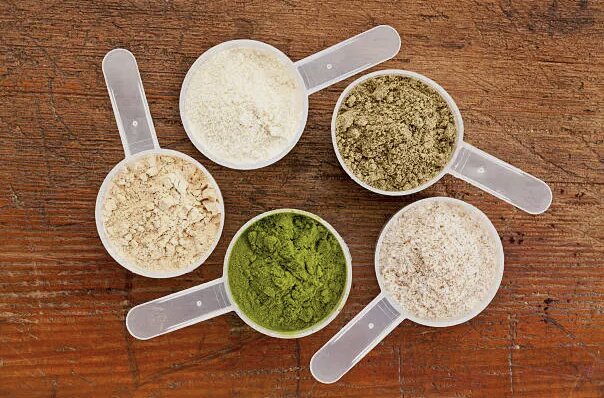
Plant protein comes from, depending on the product – peas, brown rice, soy or a combination. That last word matters. A single plant source often lacks one or more essential amino acids in adequate amounts. Pea protein is low in methionine; rice protein is low in lysine. But combined, they cover each other’s gaps. Most good plant protein powders today use exactly this logic: a pea-rice blend or a multi-source formula that gives you a complete amino acid profile in one scoop.
This one detail – single source versus blend- is what most guides miss. The plant protein category isn’t monolithic.
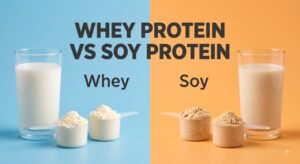
Plant Protein vs Whey Protein: Side-by-Side
| Factor | Whey Protein | Plant Protein |
| Source | Dairy (milk) | Peas, rice, soy (usually blends) |
| Complete protein | Yes, on its own | Soy and blends: yes. Single pea/rice: no |
| Leucine per serving | Higher (~11% of amino acids) | Lower (~8%); needs a larger serve to match |
| Protein quality (DIAAS) | ~0.97–1.09 (isolate) | Pea alone: ~0.82; optimised pea-rice blend: up to 0.84 |
| Digestion speed | Fast: 60–90 min peak | Moderate: 90–120+ min |
| Long-term muscle gains | Benchmark | Comparable when leucine and protein are matched |
| Lactose/vegan-friendly | Contains lactose; not vegan | Lactose-free; vegan |
| Fibre | Low | Higher |
| Environmental footprint | Higher | Lower |
| Taste and texture | Smooth, mixes easily | Earthier, grittier; needs good flavouring |
| Cost (India) | ₹1.50–2.50/g protein | ₹2.00–4.00/g protein |
Is Plant Protein Complete? The Myth That Needs to Die
Here’s the part that stings a little: the “plant protein is incomplete” narrative is technically true for some single-source powders but functionally misleading for how most people actually eat and supplement.
Yes, a pea protein isolate used alone is low in methionine (a sulphur-containing essential amino acid). Brown rice protein alone is low in lysine. Used in isolation, neither qualifies as a complete protein on the DIAAS scale (Digestible Indispensable Amino Acid Score – the FAO’s current gold standard for measuring protein quality).
But this framing falls apart as soon as you look at blends.
Herreman et al. (2020), published in Food Science & Nutrition, modelled optimal pea-rice blends. A mix of approximately 59% pea and 41% rice achieves a maximum DIAAS of 0.84, higher than either source alone, and approaching the 0.97–1.09 range for whey isolate. Soy protein, independently, already qualifies as high-quality protein with a DIAAS ≥0.75.
One more myth to bury: the idea that vegetarians must combine protein sources at every single meal to stay complete. Your body maintains an amino acid pool. Get diverse protein sources across the day, dal at lunch, a plant shake post-workout, nuts in between and your body assembles what it needs. Meal-by-meal combining is outdated 1970s nutritional thinking, not current science.
Which Builds More Muscle?
Whey has a per-serving advantage. More leucine, faster absorption, higher DIAAS. In the first 90 minutes post-workout, whey floods your bloodstream with amino acids faster than most plant sources. This triggers a stronger acute spike in muscle protein synthesis.
But here’s what the long-term data actually shows.
A double-blind randomised controlled trial by Babault et al., published in the Journal of the International Society of Sports Nutrition (2015), tested this directly. 161 men aged 18–35 completed 12 weeks of resistance training. One group took 25g of pea protein twice daily. Another took 25g of whey protein concentrate. A third took placebo. After 12 weeks:
- Muscle thickness gains were comparable between the pea and whey groups
- Strength improvements did not differ significantly between groups
- Both protein groups outperformed placebo
The conclusion from the researchers: “Since no difference was obtained between the two protein groups, vegetable pea proteins could be used as an alternative to whey-based dietary products.”
The practical nuance: plant proteins generally need a slightly larger serving to match the leucine content of whey. Target at least 2.5g of leucine per serving check your label. If your plant protein hits that leucine target, and your total daily protein reaches 1.6–2.0g/kg as the ISSN recommends, you’re in the same ballpark as whey for long-term muscle gains.
Source matters. Dose matters more.
The Other Differences: Digestion, Allergens, Gut, Sustainability
Digestion and Food Sensitivities
Whey protein contains lactose. For a significant portion of India’s population, this is not a minor detail. Studies estimate lactose intolerance affects roughly 65–70% of South Asians considerably higher than Western European populations. If whey concentrate gives you bloating or loose stools within an hour of drinking it, your gut isn’t broken. You’re reacting to lactose, and the fix is either switching to whey isolate (which has most lactose removed during filtration) or moving to plant protein entirely.
Plant protein is naturally lactose-free and vegan. Pea protein is hypoallergenic for most people. The exception: soy is one of the eight major food allergens, so check labels if you have soy sensitivity. Some people with IBS find pea protein can cause bloating due to oligosaccharides, though this varies individually.
Fibre and Micronutrients
A scoop of whey protein isolate delivers almost zero dietary fibre. Plant proteins, depending on processing, retain more of the original plant’s fibre and micronutrient content. Average fibre intake in India sits well below the recommended 25–30g/day. For people trying to hit both protein and fibre targets, a plant protein delivering 2–4g fibre per serve adds a small but real benefit.
Sustainability
Dairy farming has a substantially higher environmental footprint than plant agriculture higher water usage, higher land use per gram of protein, and higher greenhouse gas emissions. If sustainability is part of how you make food choices, plant protein is the cleaner option on this dimension. This doesn’t make whey wrong; it makes it a trade-off worth knowing about.
Taste and Cost
Whey protein, especially concentrate, mixes smoothly and has a neutral dairy base that takes chocolate or vanilla flavours well. Plant protein is earthier and grittier. Quality brands spend significant effort on flavouring to address this some land it, some don’t. If you’ve tried one bad-tasting plant protein and written off the category, try another brand with a sample.
On cost, whey concentrate still wins at the budget end. Whey isolate and quality plant protein blends sit in similar price bands per gram of protein.
Which Should You Choose?
This is the question the comparison builds toward, and the honest answer is: it depends on three things – your diet, your digestion, and your values.
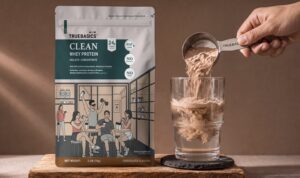
Choose whey protein if: You tolerate dairy well, want the most efficient leucine delivery per gram, and are optimising specifically for maximum acute muscle protein synthesis. TrueBasics Clean Whey Protein Isolate : 25g of protein per scoop, no artificial sweeteners, no lactose due to the isolate filtration process fits this profile. It’s what I use post-workout on training days, mixed with water rather than milk to keep the calorie count tight.
Choose plant protein if: You’re lactose intolerant, vegan or vegetarian, gut-sensitive, or specifically buying toward sustainability. Look for a pea-rice blend with at least 20–25g protein per serving and a leucine content of approximately 2.5g. Read the label not all plant proteins make the amino acid data visible, and the ones that don’t are often not worth the money. TrueBasics Clean Plant Protein is an overall solution. It’s a blend of Pea protein and brown rice which gives 24 grams of protein per serving.
Consider a blend: Some products mix whey and plant proteins. For people who want the speed of whey with the fibre and sustainability of plant sources, this is a legitimate middle-ground worth exploring.
The cleanest summary: if you’re already using whey and it’s working, there’s no biological reason to switch unless your goals, digestion, or values change. If you’ve been avoiding plant protein because you thought it wouldn’t work, the evidence says otherwise – you just need the right kind and the right dose.
Frequently Asked Questions
What is the difference between plant protein and whey protein?
Whey is a complete dairy protein with higher leucine content and faster digestion, giving it a slight per-serving edge for muscle protein synthesis. Plant protein comes from peas, rice, soy, usually sold as blends – is dairy-free, vegan, higher in fibre, and more sustainable. Pea-rice blends and soy are complete proteins. Both build comparable muscle when leucine and total daily protein are matched.
Is plant protein as good as whey for building muscle?
Yes, over the long term. A 12-week double-blind RCT by Babault et al. (JISSN, 2015) found no significant difference in muscle thickness or strength gains between pea protein and whey protein groups at equal doses. Whey has a faster acute absorption advantage, but for 8–12 week outcomes, both perform similarly when leucine per serving is at least 2.5g and total daily protein hits 1.6–2.0g per kg of body weight.
Is plant protein a complete protein?
Single sources often aren’t. Pea protein is low in methionine; rice protein is low in lysine. But pea-rice blends and soy protein are complete – they provide all nine essential amino acids. Herreman et al. (2020) modelled an optimal pea-rice blend achieving a DIAAS of 0.84, approaching whey’s range. Your body also balances amino acids across the day, so variety matters more than combining everything in a single meal.
Which is better for digestion or weight loss: Plant Protein or Whey Protein?
Plant protein is lactose-free and typically contains more fibre, which supports satiety and suits the roughly 65–70% of South Asians who have some degree of lactose intolerance. For weight loss, both types support lean mass preservation in a calorie deficit. Total calorie intake decides fat loss – not protein source. Choose whichever gives you fewer digestive side effects, as consistency matters more than marginal protein quality differences.
Is plant protein better for the environment?
Generally yes. Dairy-based whey requires more water, land, and generates more greenhouse gas emissions per gram of protein than plant agriculture. Pea, rice, soy, and hemp all have a lower environmental footprint. If sustainability is a factor in your choices, plant protein is the cleaner option – though both can be part of a balanced, health-focused diet.
`