
Mass gainer and whey protein are not the same supplement. Whey helps you increase protein without adding many calories. A mass gainer helps you increase total calories when food alone is not enough. This guide compares their calories, macronutrient ratios, digestion, body-type fit, and best use cases.
The primary difference between mass gainer and whey protein is calorie density and macronutrient design. Whey protein usually gives 20-30g of protein with around 120-140 calories, minimal carbohydrates, and very little fat. A mass gainer combines protein with a heavy carbohydrate load, delivering 500-1,200+ calories per serving.
- Choose whey for lean muscle, recovery, fat loss, or recomposition.
- Choose a mass gainer only if you struggle to gain weight despite eating well and training consistently.
Understanding Whey Protein: Isolation & Purity
1. Production and Macronutrient Concentration
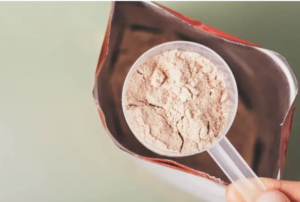
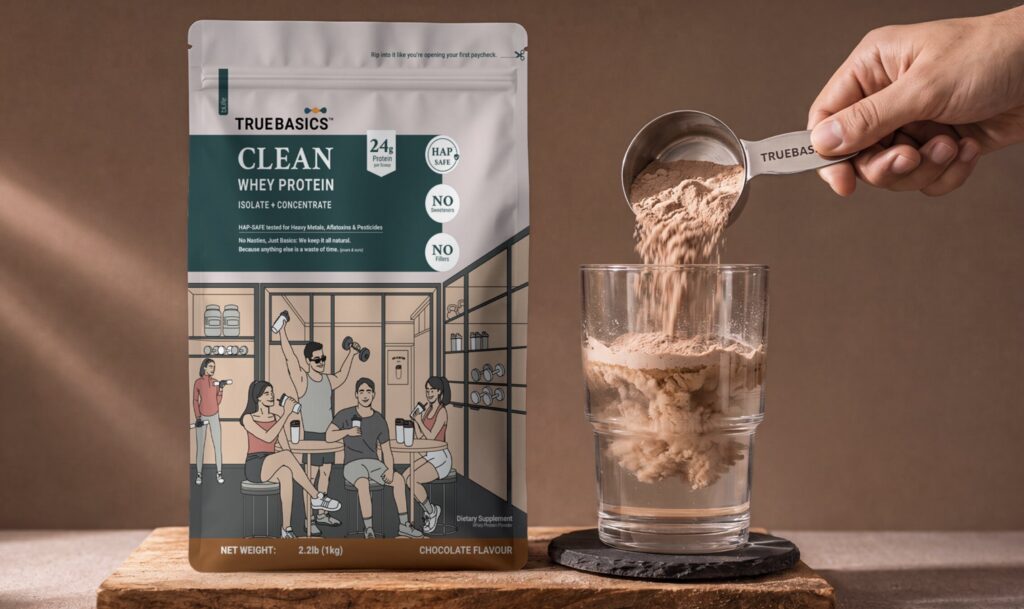
Whey comes from milk. During cheese production, milk separates into solid curds and liquid whey. That liquid whey is filtered, processed, and dried into powder. Most of the fat, water, and lactose are removed during processing. The final powder is high in protein, usually around 70-90% protein by weight.
The exact protein percentage depends on the whey type:
- Whey concentrate usually contains 70-80% protein. It has small amounts of lactose and fat. It is the most affordable and works well for most people.
- Whey isolate is more refined and usually reaches 90% or more protein. It contains less lactose and fat than concentrate.
- Whey hydrolysate is pre-digested whey protein. It is absorbed quickly and maximizes mixed muscle protein synthesis, but is usually more expensive.
All three forms support the same fundamental benefit: increasing daily protein intake. The main differences are purity, digestion comfort, lactose content, and price.
2. Amino Acid Profile and Muscle Protein Synthesis (MPS)
Whey is a complete protein. It contains all 9 essential amino acids, which your body cannot make on its own. It is also naturally rich in leucine, the amino acid most strongly linked with triggering muscle protein synthesis and promoting hypertrophy.
Muscle protein synthesis is the process your body uses to repair and build muscle tissue after training. Leucine helps activate the mTOR pathway, which acts like a biological signal for muscle repair. A standard whey serving usually provides enough leucine to support this response.
This is the reason whey protein is widely used after resistance training. It is simple, fast, easy to measure, and effective for helping people hit daily protein targets. Research reviews and sports nutrition position stands consistently support protein intake around resistance training as useful for muscle repair, recovery, and hypertrophy when total daily intake is adequate.
What One Serving Usually Contains
A typical whey protein serving provides:
| Nutrient | Approximate Amount |
| Calories | 120-140 kcal |
| Protein | 20-30g |
| Carbohydrates | 1-3g |
| Fat | 0.5-2g |
This makes whey easy to fit into most diets. It adds protein without changing your total calorie intake too aggressively.
Understanding Mass Gainers: Engineered Energy Density
1. Caloric Scaling and Glycogen Replenishment
A mass gainer is built to solve one main problem: not getting enough calories to gain weight.
Some people train hard, eat regular meals, and still struggle to move the scale. This usually happens because their total daily calorie intake is still below what their body burns. These people are often called “hardgainers”. In practical terms, they need a reliable way to add hundreds of extra calories every day.
A mass gainer solves that logistical problem. One serving can deliver 500-1,200+ calories in a drink. That can match the calorie load of a full meal.
The carbohydrate load also helps refill muscle glycogen, especially after high-volume or intense training. Glycogen is stored carbohydrate inside the muscles. When training volume is high, restoring glycogen supports better recovery and readiness for the next session.
2. Carbohydrate-to-Protein Ratios
Mass gainers are not just “bigger whey protein shakes”. They are carbohydrate-heavy formulas. Most mass gainers use a carbohydrate-to-protein ratio of 3:1 to 5:1. That means the product may contain far more carbohydrates than protein. A serving may provide 30-60g of protein, but it can also provide 100-250g of carbohydrates.
Common carbohydrate sources include:
- Maltodextrin (digests quickly; common in cheaper formulas)
- Oat flour
- Sweet potato powder
- Rice flour
- Dextrose
Oat flour and sweet potato powder usually offer steadier digestion and better overall food quality. When choosing a mass gainer, do not only check the protein number. Check where the calories are coming from.
Carbohydrates also raise insulin, which helps move glucose and amino acids into muscle cells. Nutrient timing research shows this can be highly useful after training. But this works best when paired with consistent resistance training. Without a training stimulus, extra calories are more likely to be stored as body fat.
What One Serving Usually Contains
A typical mass gainer serving provides:
| Nutrient | Approximate Amount |
| Calories | 500-1,200+ kcal |
| Protein | 30-60g |
| Carbohydrates | 100-250g |
| Fat | 4-15g |
This is why mass gainers need to be used carefully. One serving can shift your entire day’s calorie and macro intake.
Head-to-Head Comparison: Gainer vs. Whey Protein
1. Caloric Value Per Serving
Calories are the biggest difference. Whey protein usually adds around 120-140 calories per scoop. That is easy to fit into a fat-loss diet, maintenance diet, or lean muscle phase. It helps you raise protein without creating a large calorie surplus.
A mass gainer can add 500-1,200+ calories per serving. For a hardgainer, that is the point. For someone trying to lose fat or stay lean, that can be a problem. If your goal is controlled muscle gain, whey gives you precision. If your goal is aggressive weight gain because your calorie intake is too low, a mass gainer gives you volume.
2. Macronutrient Allocation
Whey protein is mostly protein. It has minimal carbohydrates and fat. One serving changes your protein intake without heavily affecting your other macros. Mass gainers change all three macros at once. They add protein, a large carbohydrate load, and sometimes moderate fat. This makes it harder to fit into a strict macro plan.
3. Primary Training Objectives
Whey protein supports lean muscle building, post-workout recovery, body recomposition, and muscle preservation during fat loss. It is useful for most people who train regularly. Mass gainers support weight gain, bulking phases, and high-calorie diets. They are best suited for underweight individuals, hardgainers, ectomorph body types, and athletes with very high energy demands. Neither supplement is automatically better.
4. Digestive Trajectory and Satiety
Whey protein is usually lighter on the stomach. Whey isolate, in particular, digests quickly for many people. You can take it after training and still eat a full meal later. Mass gainers feel heavier because they contain far more calories, carbohydrates, and sometimes fat. High-energy meals generally take longer to empty from the stomach than low-energy drinks. This can suppress appetite for several hours. Treat it like a planned meal, not a casual snack.
Summary Matrix: At-a-Glance Comparison
| Performance Metric | Whey Protein Powder | Mass Gainer Supplement |
| Average Calories | 120-140 kcal | 500-1,200+ kcal |
| Protein Per Serving | 20-30g | 30-60g |
| Carbohydrates | 1-3g | 100-250g |
| Fats | 0.5-2g | 4-15g |
| Primary Goal | Muscle repair, lean muscle, recovery | Rapid weight and size gain |
| Ideal Body Type | Most body types | Ectomorphs and hardgainers |
| Best Diet Phase | Fat loss, maintenance, lean bulk | Bulking or weight gain |
| Digestive Feel | Light and fast | Heavy and filling |
| Ease of Tracking | Easy | Harder |
Selection Strategy: Aligning Supplements to Your Goals
Choose Whey Protein If Your Goal Is Lean Muscle or Recomposition
Whey protein is the better choice for most people. Choose whey if you want to build lean muscle, recover better after training, maintain muscle during fat loss, or increase protein without adding unnecessary calories. It works well during a cut, maintenance phase, or slow lean bulk.
Choose a Mass Gainer If You Are an Ectomorph or Hardgainer
Choose a mass gainer if your real problem is total calories. Hardgainers usually know the pattern. They lift consistently, eat often, and still do not gain weight. If that sounds familiar, a mass gainer can help create the energy surplus required to maximize skeletal muscle hypertrophy.
But do not guess. Track your food for two weeks first. Before buying a mass gainer, try increasing calories from whole foods such as full-fat dairy, peanut butter, oats, bananas, rice, eggs, nuts, olive oil, paneer, or tofu. If your calorie target is still difficult to hit after that, a mass gainer makes sense.
Can You Combine Mass Gainers and Whey Protein?
Yes, but most people do not need to. Mass gainers already contain a large amount of protein. Adding whey on top can push your daily protein and calories far beyond what your body needs. It also increases cost without necessarily improving results.
Four Mistakes People Make With These Supplements
- Using a Mass Gainer Without a Training Plan: A mass gainer creates a calorie surplus. Without resistance training, that surplus has no clear muscle-building signal. The result is usually fat gain, not quality size gain.
- Using Whey as a Meal Replacement: Whey protein is a supplement, not a complete meal. It helps you hit your protein target, but it does not replace the fibre, micronutrients, healthy fats, and overall nutrition found in whole foods.
- Choosing Based Only on Price Per Kg: A cheap mass gainer may look like better value, but it often contains cheaper carbohydrate sources and less balanced nutrition. Always check calories, protein, carb source, sugar content, and serving size.
- Ignoring Your Actual Calorie Target: Do not choose a mass gainer just because you want muscle. Choose it only if you need more calories.
The Bottom Line
Whey protein and mass gainer are not interchangeable. They solve two different problems. Whey protein helps you increase protein intake without adding many calories. It is the better choice for most people who train regularly, especially those focused on lean muscle, recovery, fat loss, or body recomposition.
A mass gainer helps you increase total calorie intake. It is useful for hardgainers, underweight individuals, or athletes who genuinely cannot eat enough food to gain weight. Choose whey if your diet already provides enough calories but lacks protein. Choose a mass gainer if your diet lacks total calories and the scale will not move despite consistent training.
Understand your goal. Track your intake. Pick the supplement that fixes the actual problem. Next step: Use our Lean Mass vs Bulk Calorie Calculator to find your daily calorie target. Once you know that number, choosing between whey protein and a mass gainer becomes much easier.
Frequently Asked Questions
Which is better for beginners, mass gainer or whey protein?
Whey protein is better for most beginners because it supports muscle recovery without adding unnecessary calories. Beginners who want lean muscle, fat loss, or body recomposition should start with whey. A mass gainer is better only for beginners who are underweight or unable to gain weight despite eating enough and following a structured resistance training plan.
Should I take whey protein or a mass gainer to gain weight?
Take a mass gainer if your main goal is weight gain and you cannot hit your calorie target through food. Mass gainers provide 500-1,200+ calories per serving. Whey protein provides around 120-140 calories and mainly helps with protein intake. Whey can support muscle growth, but it does not provide enough total energy for rapid weight gain.
Will a mass gainer make me gain body fat?
A mass gainer can increase body fat if your calorie surplus is too large or you are not training properly. Mass gainers are calorie-dense by design. When combined with progressive resistance training, those calories can support muscle gain. Without training or calorie control, the extra energy is more likely to be stored as fat.
Is whey protein vegetarian?
Yes, standard whey protein is vegetarian. Whey is derived from milk during cheese production. It does not contain meat or animal tissue. It fits a lacto-vegetarian diet. However, people following strict vegetarian rules should still check the label for flavouring agents, enzymes, or additives that may not match their dietary preferences.
What is the difference between mass gainer and whey protein for skinny guys?
For skinny guys or hardgainers, the main issue is usually total calories, not just protein. A mass gainer helps create the calorie surplus needed for weight gain. Whey protein is better once calorie intake is already sufficient and the goal shifts toward leaner, more controlled muscle gain. Skinny beginners should track food intake before choosing either.