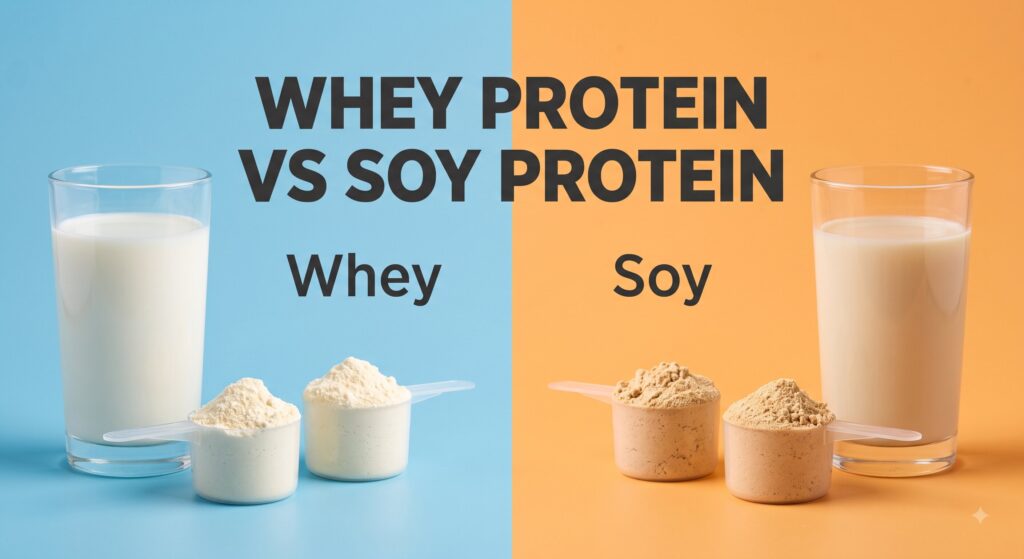

Whey holds a favoured position in gyms around the globe. While soy garners suspicion about its viability for muscle development and its effects on hormones. Yet, the science and research surrounding these proteins are more even than you might believe. This protein guide will examine whey and soy. It will cover muscle development, digestion, heart health, weight control, dietary needs, and more. We hope to assist you in selecting a protein that suits your body and routine.
Both whey and soy contain all nine essential amino acids and are deemed complete proteins. Whey generates a more rapid and profound short-term muscle protein synthesis response. And it contains more leucine.
When factoring in resistance training, total protein, and leucine, soy provides long-term comparable muscle and strength gains. If the goal is a rapid response and high post-exercise amino acid availability, choose whey. If the goal is a dairy- and vegan-protein supplement with research showing soy has positive effects on cholesterol, choose soy.
What Are Whey and Soy Protein?
Whey is a dairy protein and is one of the two proteins present in milk. When milk is coagulated during cheese-making, whey is separated. It is sold in the forms of whey concentrate, isolate, or hydrolysate. Concentrate contains more lactose and fat, and the isolate form has a higher protein proportion and lower lactose content.
Soy protein is derived from soybeans. It is sold in the forms of soy flour, concentrate, and isolate. It contains different protein content and varying degrees of fibre and isoflavones. The most common form of soy protein in protein powders is soy protein isolate.
They both contain all nine essential amino acids, so technically both are complete proteins. There is some variability, though, in the proportion of amino acids and how easy each is to digest. The Food and Agriculture Organisation suggests DIAAS, which stands for Digestible Indispensable Amino Acid Score, to rank protein digestibility. This system assesses how easily various essential amino acids are digested.
Whey vs Soy Protein: Side-by-Side Comparison
The main difference is not whether either protein works. Both can support muscle development and daily protein intake. The differences lie in leucine content, digestion, dietary suitability and additional health considerations.
| Factor | Whey Protein | Soy Protein |
|---|---|---|
| Source | Dairy milk | Soybeans |
| Complete protein | Yes | Yes |
| Leucine content | Higher, usually around 8–11% of protein | Lower, usually around 6–8% of protein |
| Digestion speed | Fast | Relatively fast, especially as an isolate |
| Immediate muscle protein synthesis | Usually stronger | Effective but often lower at equal protein doses |
| Long-term muscle gains | Strong with resistance training | Comparable when protein and leucine are matched |
| Suitable for vegans | No | Yes |
| Lactose-free | Isolate may contain very little lactose, but it remains dairy-based | Yes |
| Major allergen | Milk | Soy |
| Additional health angle | Convenient source of essential amino acids | May modestly lower LDL cholesterol |
| Taste and texture | Usually smoother and creamier | May taste earthier or feel grittier |
| Cost | Often higher | Often more affordable, though prices vary |
One leucine-matched study used 19 grams of whey isolate or 26 grams of soy isolate to provide the same 2-gram leucine dose. This illustrates why servings of soy sometimes need to be slightly larger. Although the exact difference depends on the product.
Which Is Better for Muscle Building?
When it comes to building muscle, especially after a workout, whey is the clear winner. This is because whey protein is high in the essential amino acid leucine. Leucine initiates muscle protein synthesis and raises blood amino acid levels even faster than soy protein.
In one study on young males, after a resistance workout, the muscle protein synthesis response to whey was 31% higher than that of soy. Even though both provided the same essential amino acids. Because of this, whey is often considered the superior option for the short term.
However, this doesn’t mean soy protein is ineffective for muscle building. For a clearer picture, you should look at longer studies.
One example is a 12-week resistance training study with matched servings of leucine from whey and soy. Participants were given either 19 grams of whey protein isolate or 26 grams of soy protein isolate. Both servings had 2 grams of leucine. All 48 participants in the study gained lean muscle and strength with no major differences between the 2 groups.
Also, a meta-analysis of 9 studies with 266 subjects showed no significant difference between animal and soy protein. This was done in strength- and resistance-training-related lean body mass gains. The source of protein was less important than maintaining a sufficient daily protein intake.
For most healthy adults, a protein serving size is typically 20–40 grams, depending on diet, training, age, and body weight.
If your soy protein has a lower leucine amount per serving, you can use the label to determine the proper serving size. You cannot use the rule of increasing the serving size by 20–30% because the formula may differ. Extra powder will also add extra calories.
Does Soy Protein Raise Oestrogen or Lower Testosterone?
There is no proof from clinical studies that a normal amount of soy in a diet reduces testosterone or raises estrogen in men.
The worry is from the soy isoflavones. These compounds from soy can connect to the estrogen receptors in the body, but are not human estrogen. The activity is much weaker and depends on the receptor type, the tissue, and the amount. To say that soy is “estrogenic” is misleading without this information.
A meta-analysis of 41 clinical studies examined soy protein and isoflavones. It looked at their effects on men’s reproductive hormones. In total, testosterone levels were measured in 1,753 men, free testosterone levels in 752 men, and estradiol levels in 1,000 men.
Researchers reported no significant changes in:
- Total testosterone
- Free testosterone
- Estradiol
- Estrone
- Sex hormone-binding globulin
In the subgroup analyses, they reported no significant changes in isoflavone dose or study duration.
Unusual and excessive intake of soy should not be the basis of proof for normal soy intake. In a varied diet, the amount of soy in a normal protein shake is very different from the unusual and excessive intake of soy in a diet.
If you have a hormone-sensitive condition diagnosed by a doctor, a soy allergy, or follow a medically restricted diet, you should consult a qualified healthcare professional before considering regular soy supplementation.
Other Differences: Health, Allergens, Taste and Cost
Health Benefits
Soy has the strongest evidence for an additional cholesterol-related benefit.
A meta-analysis of 43 controlled trials showed that a median intake of 25 grams of soy protein over 6 weeks reduced LDL cholesterol levels by 4.76 mg/dL compared with non-soy protein. Total cholesterol also decreased by 6.41 mg/dL. Although the average reduction of LDL cholesterol was 3-4% and considered modest, soy protein may be beneficial. But only when included in a heart-healthy diet.
Whey protein contains a higher concentration of essential amino acids. It may be beneficial for meeting protein goals while limiting fat and carbs.
Whey protein also contains cysteine. Cysteine is the precursor of glutathione. And in theory, cysteine supplementation may increase glutathione levels. Some studies have shown increased glutathione levels with whey supplementation. However, this does not suggest that whey supplementation provides enhanced immunity. Nor should it be considered a treatment.
Protein may increase satiety, but the effects on appetite will vary by product. Neither soy nor whey protein should displace a variety of nutrient-dense foods. This includes fruits, vegetables, whole grains, and legumes.
Soy protein isolate also differs from whole soy foods and has a different fibre profile. Compared to protein isolate, products like tofu, edamame, and other minimally processed soybeans will have a higher fibre content.
Allergens and Digestion
Milk and soy are both common food allergens.
Whey can cause allergic reactions since it is a type of dairy. Whey isolate has less lactose than concentrate; however, it is not dairy-free. Experts suggest those with high lactose intolerance read the labels.
Those allergic to soy will not benefit from soy protein, but it is a great option for vegans and those with lactose intolerance.
The digestive issues some people may experience with these proteins are most likely caused by a sweetener. Or it could be another ingredient in the protein powder. It is often caused by a large serving size or by other ingredients such as gums or flavouring agents.
Taste, Texture and Price
Whey blends easily, and since it is a dairy-based protein, it is rather easy to flavour. It is easily available in many flavours, such as coffee, chocolate, vanilla, and even fruity flavours.
Soy protein, on the other hand, is cheap and easily available. However, when you look at the price of the packet, you must also consider the price per unit of protein and the number of servings. If a protein powder is low-priced but has a large serving size with very low protein, the powder offers poor value.
A cheaper tub offers poor value when each scoop contains less protein than expected.
Which Protein Should You Choose?
Choose according to your diet, digestion and training goal.
Choose Whey When:
- You tolerate dairy well.
- You want a high-leucine post-workout protein.
- You prefer a smoother shake.
- You want a smaller serving to deliver a high dose of essential amino acids.
- You prioritise the immediate muscle protein synthesis response.
Choose Soy When:
- You follow a vegan or dairy-free diet.
- You cannot tolerate lactose.
- You want a complete plant-based protein.
- You want a more economical protein option.
- You are interested in soy protein’s modest LDL-lowering effect.
Consider a Protein Blend When:
- You want proteins with different amino acid or digestion profiles.
- You prefer a plant blend that improves taste and amino acid balance.
- You want flexibility instead of treating the choice as all-or-nothing.
Be sure to compare factors like protein per serving, added sugar, allergen content, and independent lab testing when purchasing a protein powder.
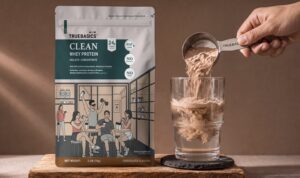
TrueBasics offers a clean protein range that consists of plant-based, whey isolate, and blended proteins. TrueBasics claims the whey variety undergoes testing for heavy metals, pesticides, microbial contamination, aflatoxins, and the accuracy of macronutrient levels.
TrueBasics also has a comparison between mass gainer and whey protein that may help when choosing a dairy protein supplement.
When it comes to protein, the most important thing is your total daily intake. A meta-analysis of 49 studies with 1,863 participants showed that protein supplementation improved resistance training performance, but gains in fat-free mass plateaued at a protein intake of 1.62 grams per kg of body weight.
Your protein needs may vary with your age and stage of life, physical activity, calorie intake, and training intensity.
Conclusion
There cannot be a single winner in the soy-versus-dairy protein debate. Dairy has the quickest and most effective protein for muscle gain. When training is structured and protein intake is adequate, soy, as a complete protein, may prove equally effective for muscle gain.
Additionally, soy is a complete, plant-based, lactose-free protein that may help lower LDL cholesterol. Dairy protein is generally smoother, has less lactose per serving, and has more leucine.
Find the protein source that aligns with your dietary restrictions. And the one that helps you stay consistent with meeting your protein target. Consider whey if you have no issues with dairy and want to optimise your muscle recovery with a post-workout protein source. Consider soy if you are dairy-free or if you prefer a plant-based protein source.
Check out the TrueBasics Clean Protein Range. Look at the labels and select the protein that best matches your dietary needs.
Frequently Asked Questions
1. Is Whey or Soy Protein Better?
Whey protein would be better for those looking to optimise muscle protein synthesis, as it has a higher leucine concentration. Soy is a complete protein as well and, along with leucine and resistance training, can achieve the same level of muscle and strength gains. It really comes down to personal preferences and restrictions.
2. Is Soy Protein as Good as Whey for Building Muscle?
Definitely. Soy protein can achieve the same level of muscle growth with an adequate protein intake and progressive resistance training. In general, whey protein would yield a stronger short-term response than soy protein. However, in several studies, matched doses of leucine yielded similar results for muscle growth and strength.
3. Does Soy Protein Increase Oestrogen or Lower Testosterone?
There are no significant findings with normative use. In a meta-analysis of 41 studies, there were no significant changes in total and free testosterone. And in measured oestrogen levels in males who consumed soy protein and isoflavones. Soy isoflavones interact uniquely with oestrogen receptors compared with human oestrogen.
4. Which Is Better for Weight Loss?
Neither protein source is a magic fat-burning solution. They can both help meet dietary protein goals and make a calorie-restricted diet easier to manage. Some people find whey more filling than soy. For those on a vegan or dairy-free diet, soy is better. Many other factors are more important for fat loss than these proteins, like total calories consumed and lifestyle habits.
5. Can I Mix Whey and Soy Protein?
Yes. Healthy adults can combine the two proteins as long as there are no allergies or other medical concerns with either protein. They make a great combination, combining whey’s higher leucine with soy’s greater amino acid diversity. Some studies also show that protein synthesis after workouts may be aided by soy-dairy mixtures.